World Water Solutions — Mililani, Hawai'i
Walk the Agro Culture Sanctuary
Three acres. One living blueprint. Come walk the grounds with us, station by station — the aquaponic system, the biochar water filter, the electroculture beds, the lava rock food forest — every detail explained so you can build your own version at home, in your yard, or on your farm.
What This Place Is
The largest naturally developed sanctuary of its kind in the islands
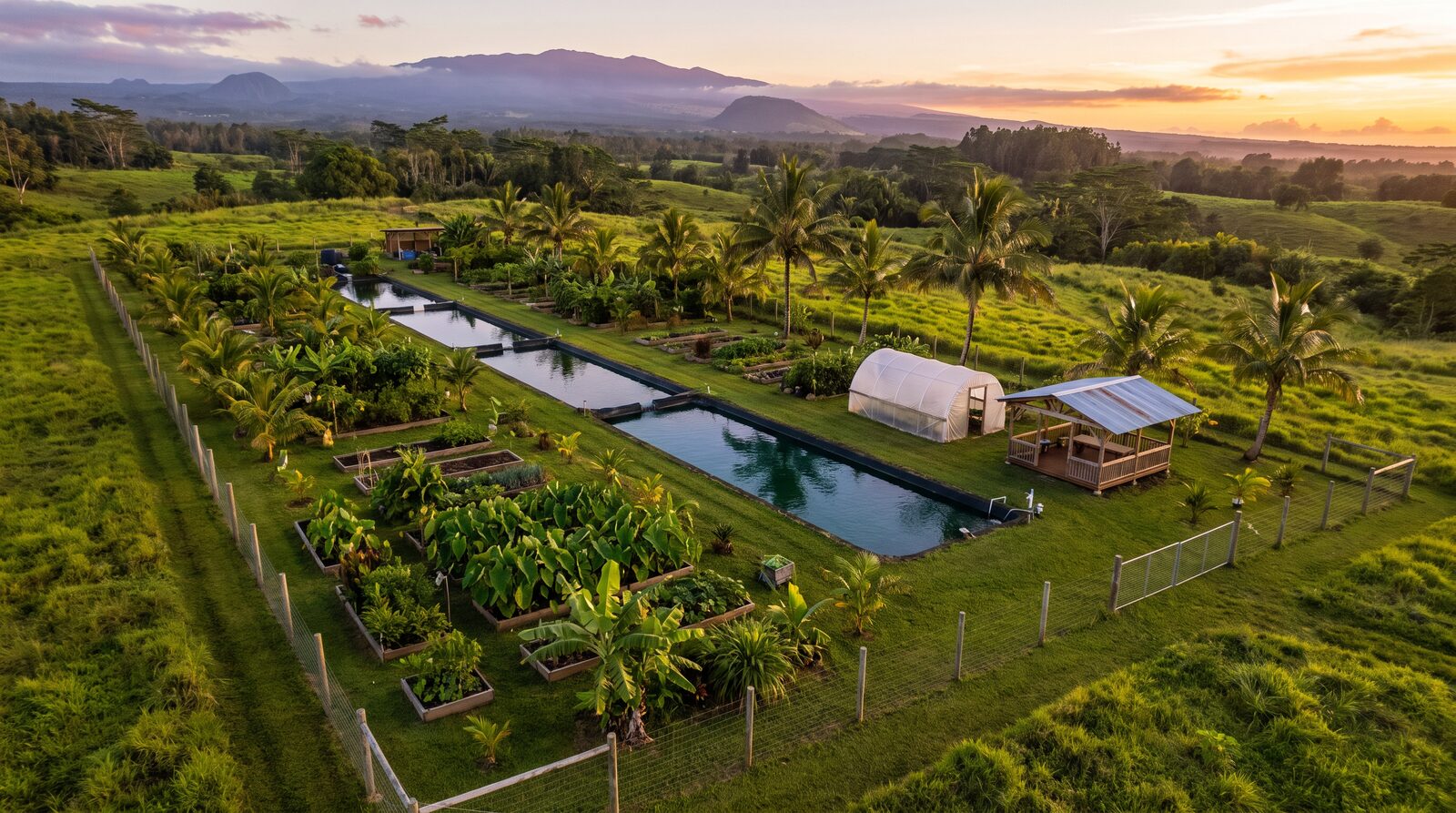
The WWS Agro Culture Sanctuary is a three-acre, self-sustaining ecosystem designed to prove — in a way anyone can see, touch, and copy — that food, clean water, energy, and culture can be produced together on a single piece of land. It's a working farm, a research site, and an open-source teaching tool all at once.
The grounds run 871 feet long by 151 feet wide, enclosed by 6-foot pig fencing anchored on 8-foot hot-dipped galvanized T-posts set in concrete — a secure perimeter that protects habitat restoration while keeping the sanctuary open and walkable for students, farmers, and families.
Built to be duplicated
Every system on this walkthrough — the aquaponics, the biochar filter, the electroculture beds — is documented with real dimensions and materials so home gardeners and small farms can replicate it at their own scale.
100% solar-powered
A dedicated 6×10-foot solar house holds the inverters, batteries, and controls that run every pump, filter, and light on the property — off-grid resilience built into the design.
A living classroom
School field trips, university research partnerships, and cultural workshops all happen here — with sleeping quarters for maintenance staff and visiting guests during WWS's annual conference.
The Guided Walkthrough
Let's walk it together, station by station
Start at the covered entry bridge and move through each system in the order you'd experience it on the ground — what it is, how big it is, what it's built from, and how you can build a smaller version of it yourself.
 Station 1
The Covered Entry Walkway
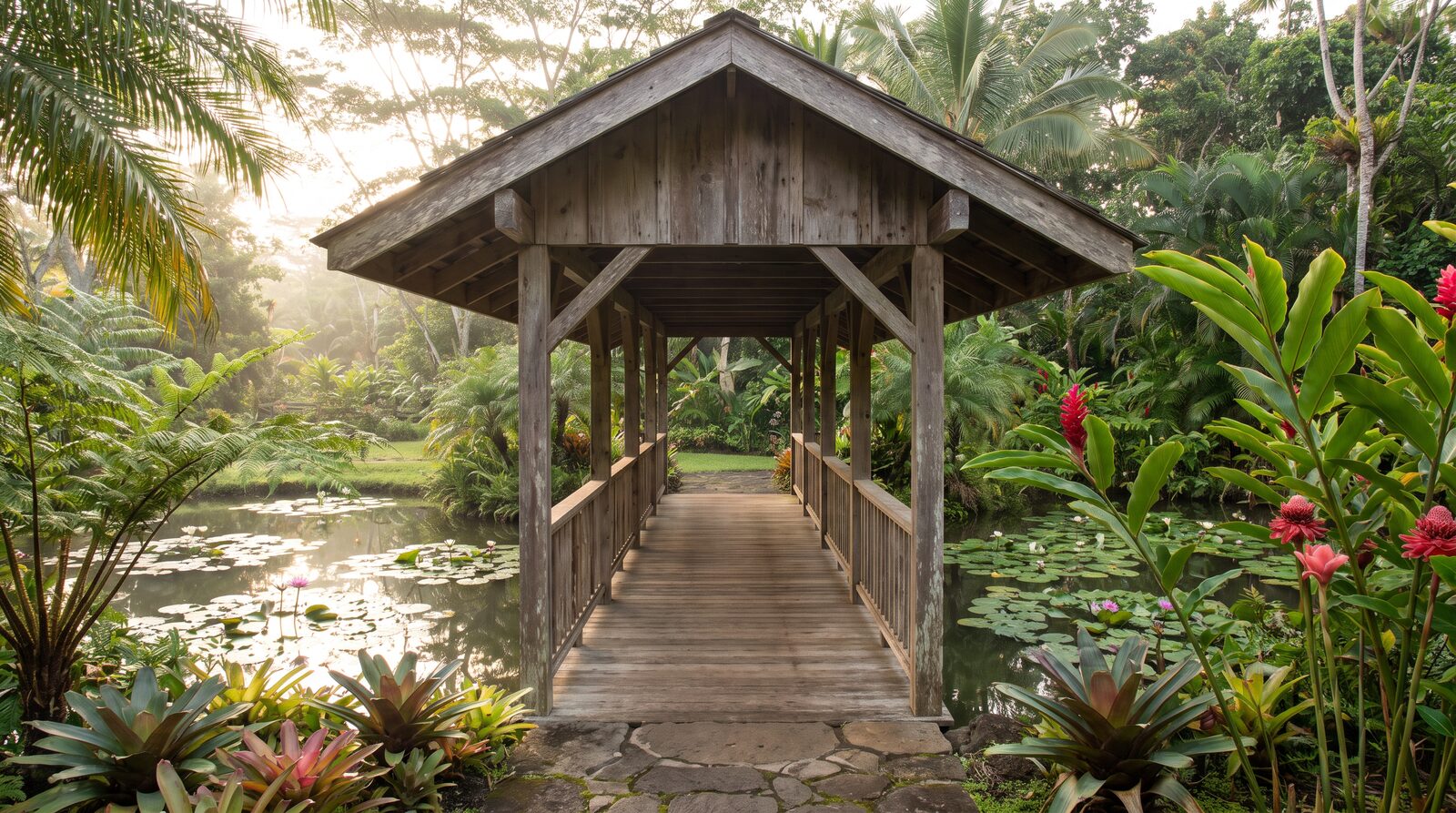
Your walk begins on a 32-foot-long covered entry walkway that gracefully bridges over a small reflective pond before you ever set foot in the growing systems. It's the sanctuary's first teaching moment: nature, culture, and innovation meeting at the threshold.
The still water beneath the bridge mirrors the sky and the surrounding plantings — a deliberate, quiet moment before the working systems begin.
A simple gravel-lined basin or repurposed stock tank with a small solar pump creates the same reflective-pond effect at a backyard scale — no bridge required, just a stepping-stone path around it.
 Station 2
Tilapia, Hawaiian Prawns, and a Closed-Loop Water Cycle
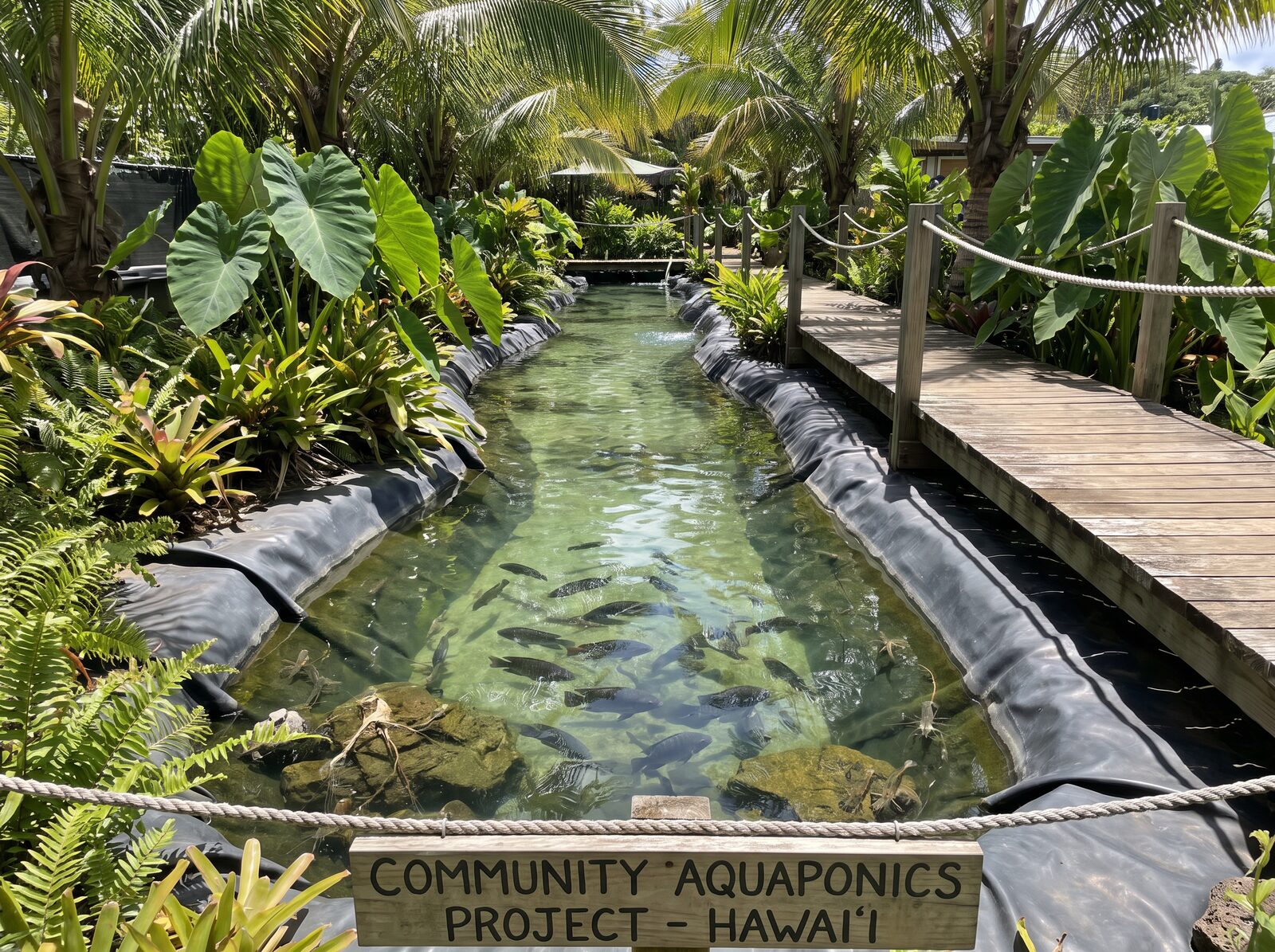
This is the heart of the sanctuary — a 300-foot-long, 6,100-square-foot aquaponic system raising tilapia and freshwater Hawaiian prawns. Fish waste becomes plant food; plants clean the water; the water returns to the fish. Nothing is discharged, nothing is wasted.
The channel is built with Firestone 45-mil non-toxic pond liner — one 30×100 ft roll for the main run, plus three 20×100 ft rolls for the connecting sections — sealed with professional bonding adhesive to create a fully closed, leak-proof loop.
Start with a single IBC tote or a 4×8 ft stock tank lined the same way with EPDM pond liner. One small submersible pump, one grow bed of gravel or clay pebbles, and a handful of tilapia or goldfish will teach you the same nitrogen cycle at 1/100th the scale.
 Station 3
The Hydroponic Greenhouse: Seed to Root Ball
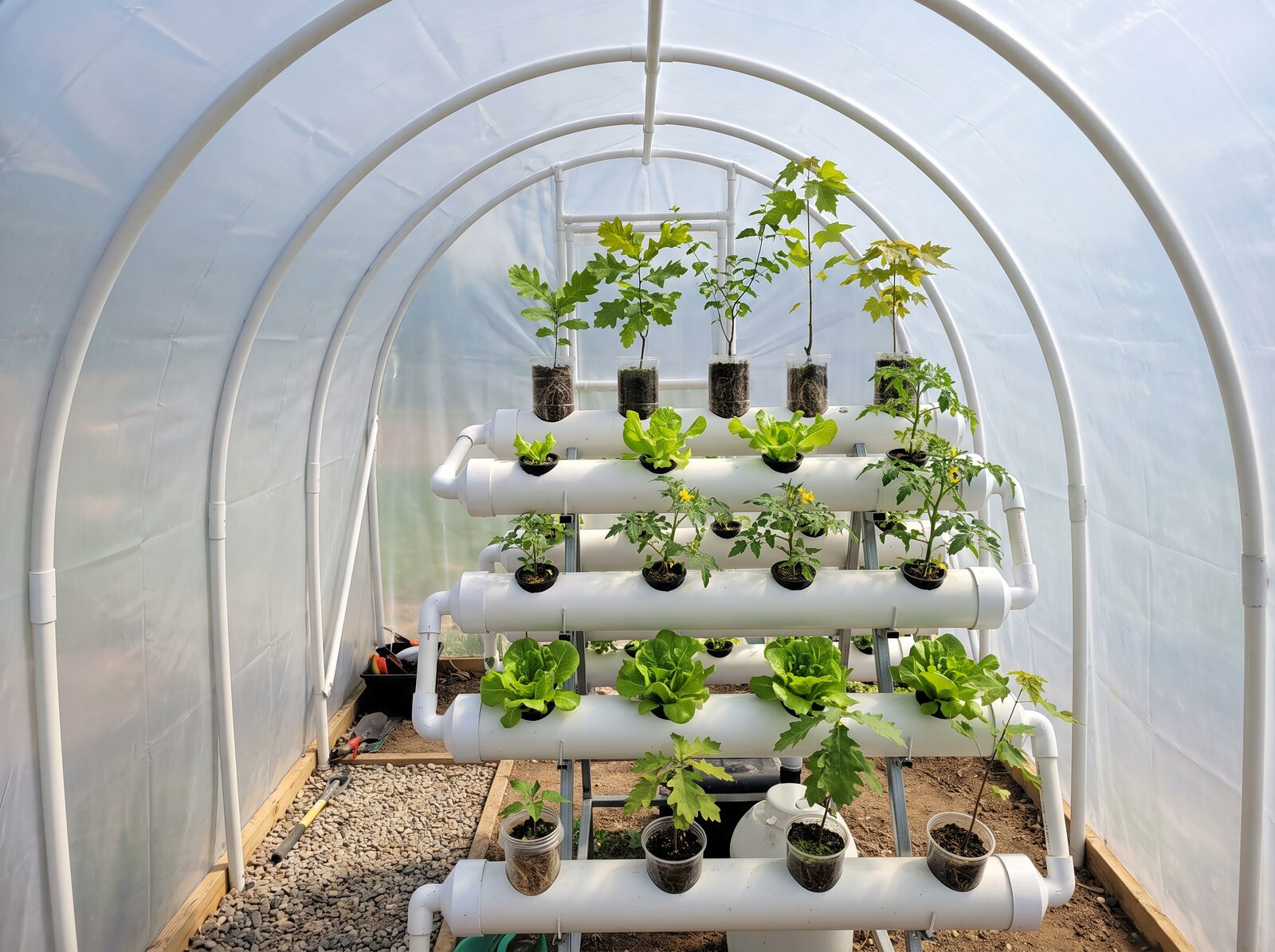
Attached to the aquaponic channel is a 12×16-foot hydroponic greenhouse, framed with 3/4-inch PVC hoops and wrapped in high-grade UV-resistant film. Nutrient-rich water pumped straight from the fish system feeds a vertical growing tower inside.
Watch the full life cycle happen in one structure: seeds sprout in net cups at the top tier, seedlings mature through the middle tiers as lettuce and fruiting plants, and native tree starts develop a full, transplant-ready root ball at the base tier before they graduate out to the food forest.
A tabletop vertical tower built from stacked 4-inch PVC pipe with drilled net-cup holes, fed by a small aquarium pump on a timer, gives you the same seed-to-transplant pipeline on a porch or lanai.
 Station 4
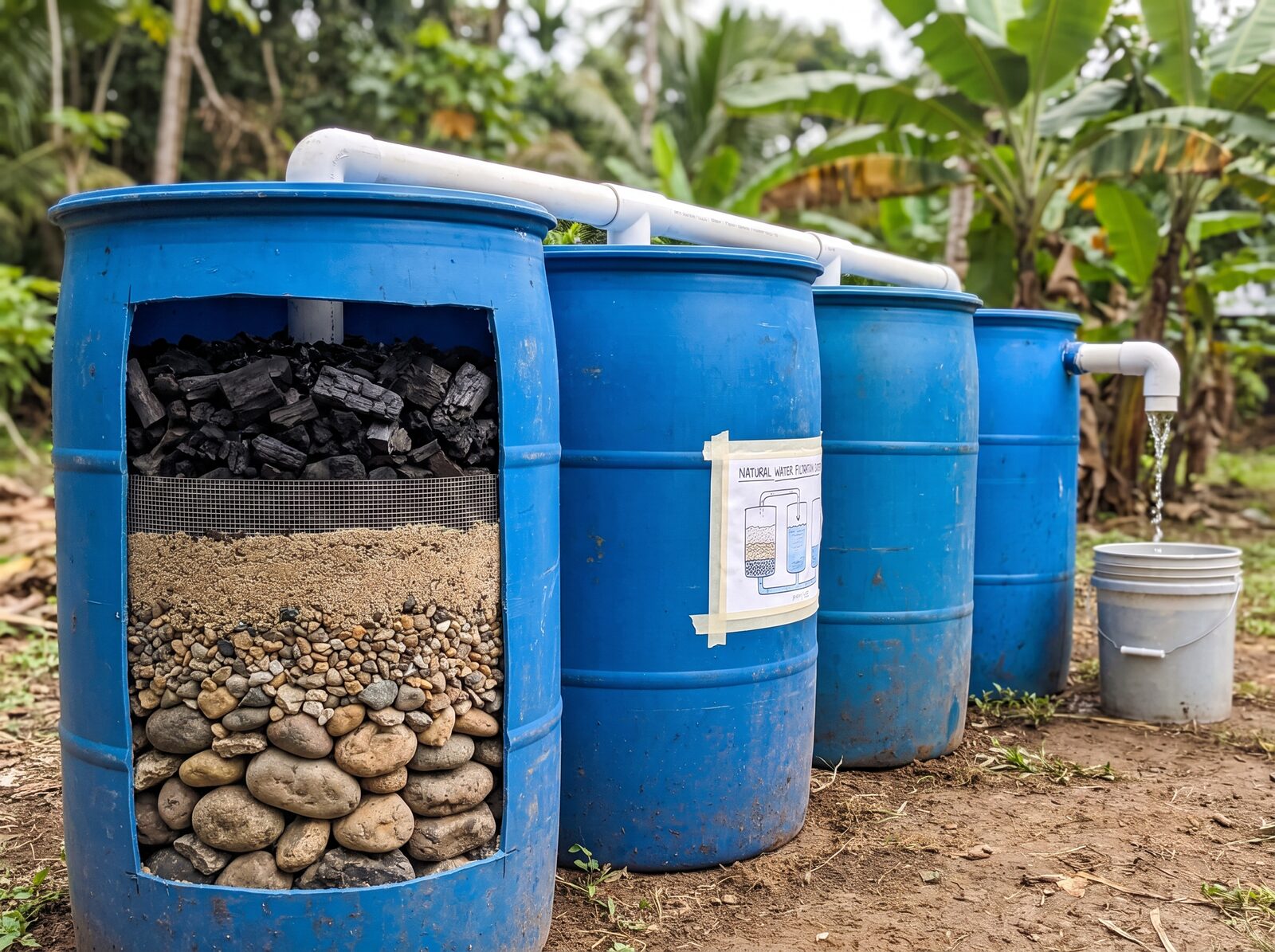
Biochar Water Filtration for Clean Water Access
To keep the whole system's water pure and renewable, the sanctuary runs a biochar-based filtration system inspired by George Kearns' natural filtration research. Four connected 55-gallon drums do the work that a chemical treatment plant would otherwise do — using nothing but rock, gravel, sand, mesh, and charcoal.
Water enters the first drum and moves downward through each layer in sequence: coarse river rock breaks the flow and traps large debris, gravel continues coarse filtration, sand captures fine sediment, a mesh screen prevents layer mixing, and a top bed of activated biochar adsorbs toxins, heavy metals, and odor — releasing clean, renewable water back into the aquaponic loop.
A single 5-gallon bucket layered the same way — rock, gravel, sand, mesh, biochar — makes a working demonstration filter for rain barrels, garden ponds, or emergency water access. It's the exact same principle at 1/44th the scale.
 Station 5
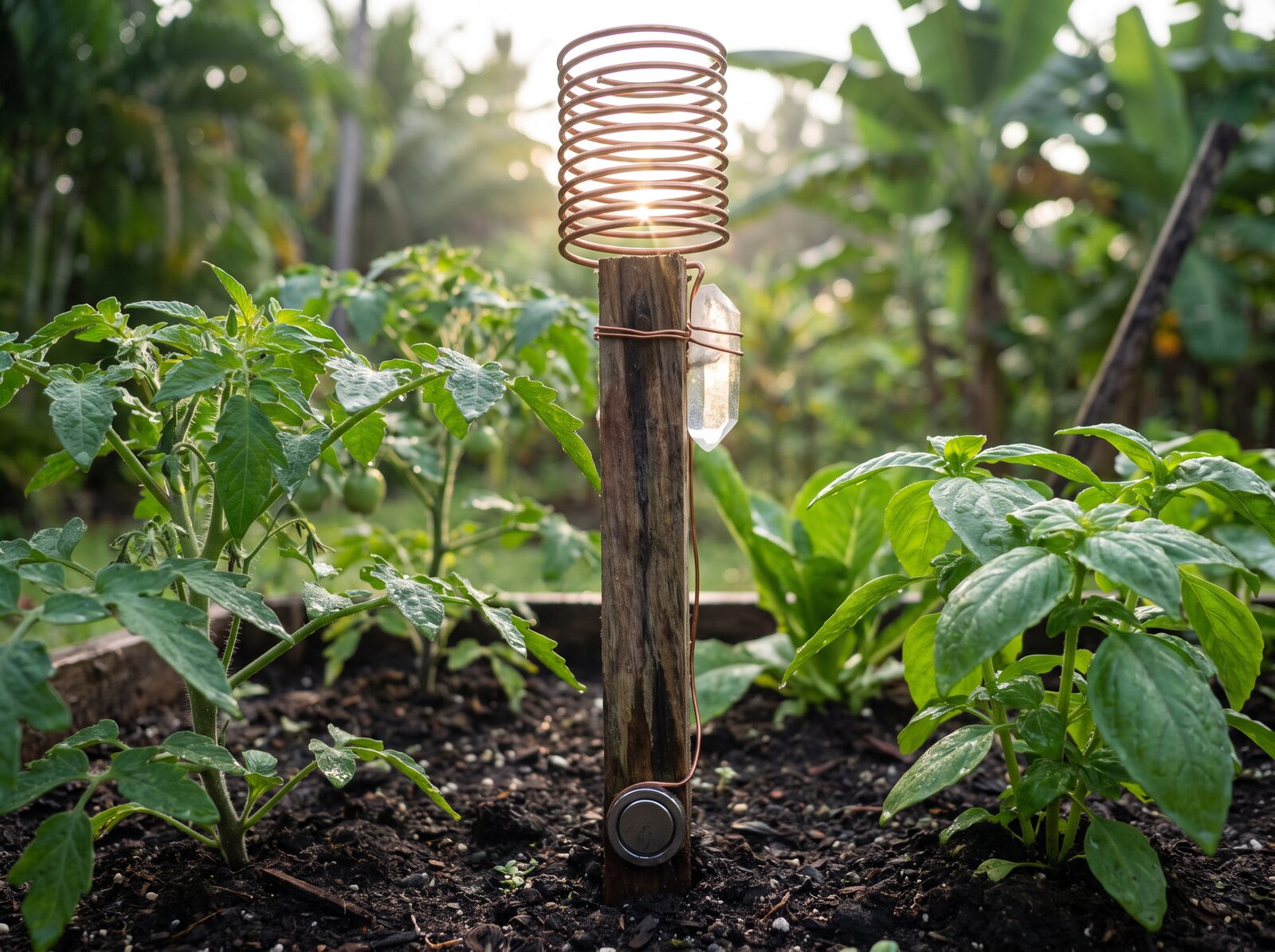
Electro-Culture Farming: Copper, Crystal, and Magnet
Scattered through the growing beds is the sanctuary's Electro-Culture Farming Network — simple antennas built from copper coils, magnets, and crystal stones that draw ambient atmospheric and geomagnetic energy down into the soil using no batteries and no external power source.
Each antenna runs on the natural DC voltage generated between the coiled copper (a strong conductor), a grounding magnet at the soil line, and a quartz crystal that helps focus and stabilize the charge. The result: measurably healthier root development, reduced pest pressure, and less dependence on synthetic fertilizer or constant irrigation.
Wrap 10–15 feet of bare copper wire into a coil around a wooden dowel, attach a small quartz point near the top with copper wire, and push the base a few inches into the soil next to a garden bed. No power source needed — just sun, sky, and ground contact.
 Station 6
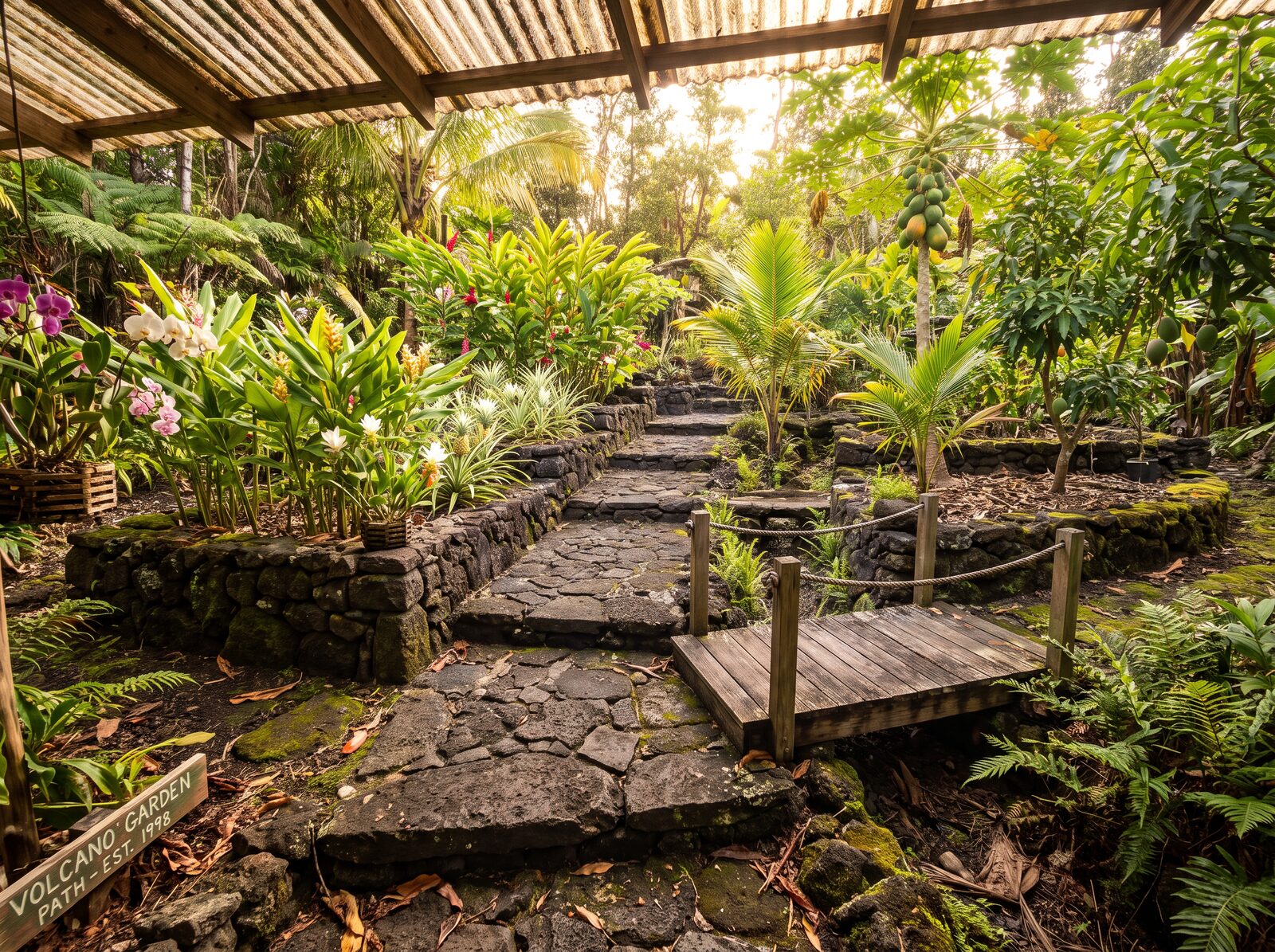
A 100-Foot Walkway Grown Into the Rock Itself
Nearly 100 feet of footpath winds through cracks and crevices in natural lava rock — the sanctuary's second signature feature. The whole walkway is covered by a raw timber post-and-beam structure with a metal roof canopy, built from unmilled, rough-hewn timber posts and beams rather than finished lumber, keeping the structure as close to the land it stands on as possible while sheltering the plants and visitors below from sun and rain.
Multi-tiered garden beds are built directly into the lava rock terracing on either side, growing a medley of Hawaiian herbs, spices, and fruit: turmeric, ginger, white pineapple, orchids, dwarf coconuts, papaya, mango, and ice cream bean trees — plus a full collection of native Hawaiian ʻāina and lāʻau plants (conue). Small footbridges cross the path at intervals, and free-ranging hens move through the beds from a predator-proof coop nearby.
You don't need real lava rock — broken concrete, urbanite, or lava rock landscaping gravel stacked into low tiered walls creates the same planting pockets and drainage. A simple cattle-panel arch or a few rough 4×4 posts with corrugated metal roofing gives you a shaded walk in a weekend.
 Station 7
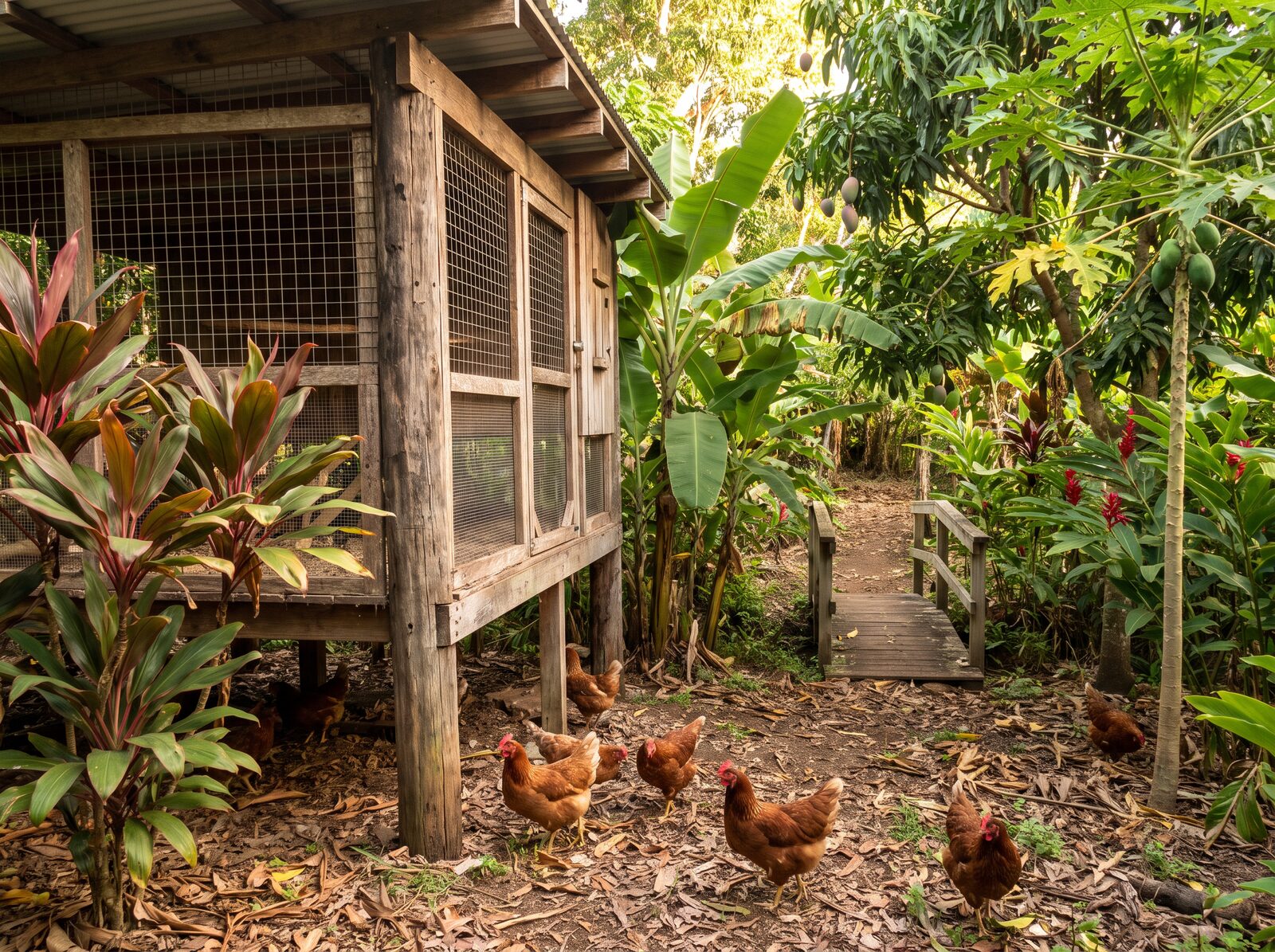
The Food Forest in Motion
Beyond the lava rock beds, the sanctuary opens into a full regenerative food forest — layered fruit trees, ground crops, and understory plants that mimic a natural forest's structure while producing food at every level. A predator-proof chicken coop houses free-ranging hens that patrol the forest floor, controlling pests and adding fertility as they go.
This is regenerative agriculture as a living system, not a static garden: birds, insects, fungi, and plants all doing their part, with people simply harvesting the surplus.
Even a small backyard can host a mini food forest layer: one fruit tree, a few shrub-height plants beneath it, a ground cover crop, and 2–3 chickens in a movable tractor coop. Same principle, smaller footprint.
Stations 8, 9 & 10
Supporting the whole sanctuary
Every growing system needs infrastructure behind it — a place to process the harvest, power that never runs out, and a home base for the people who make it work.
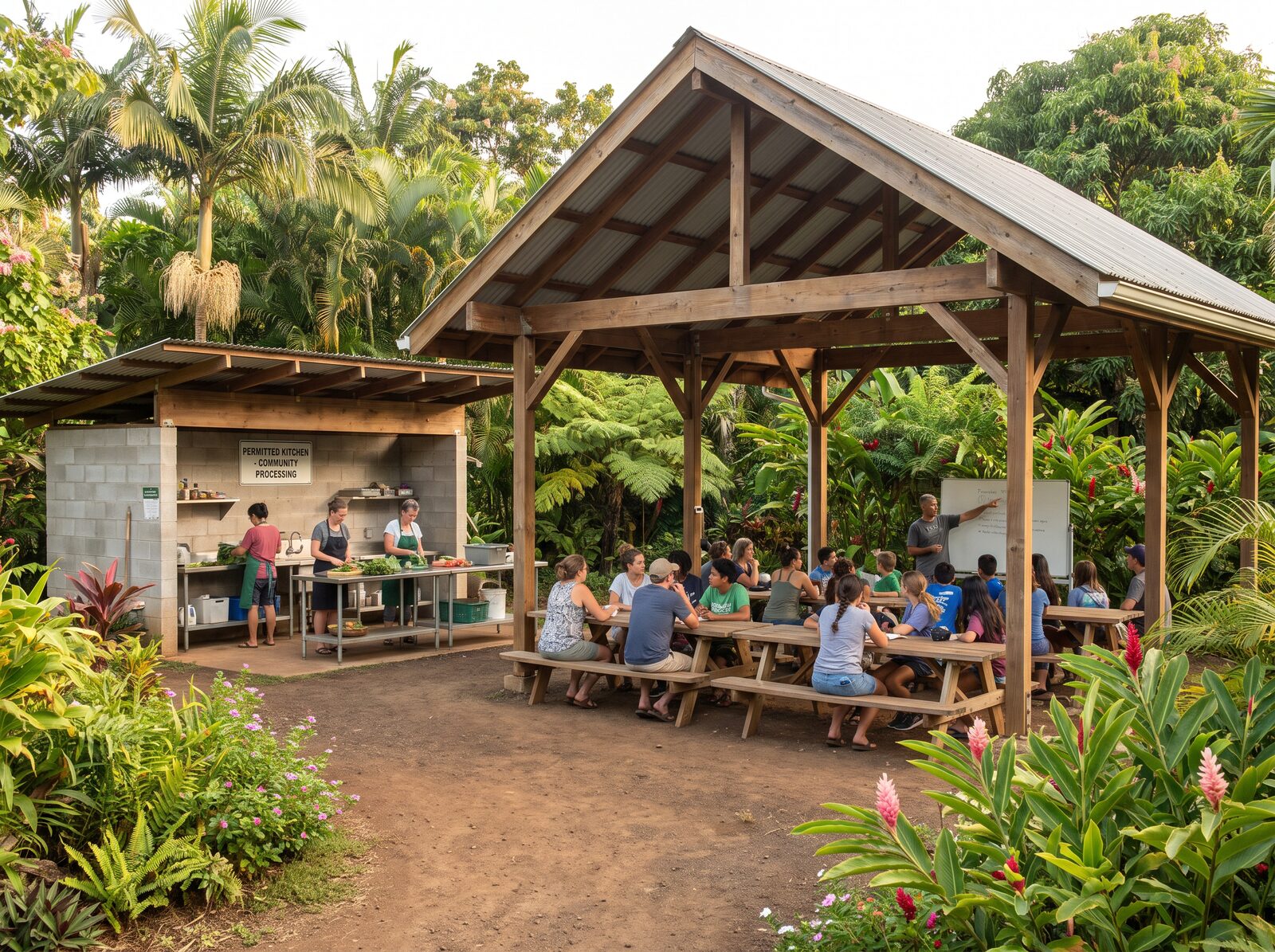
AG Food Security Kitchen & Pavilion
A 12×20-foot kitchen on a permitted concrete foundation for harvesting and processing food, plus an open-air pavilion for school field trips, university collaborations, and cultural workshops.
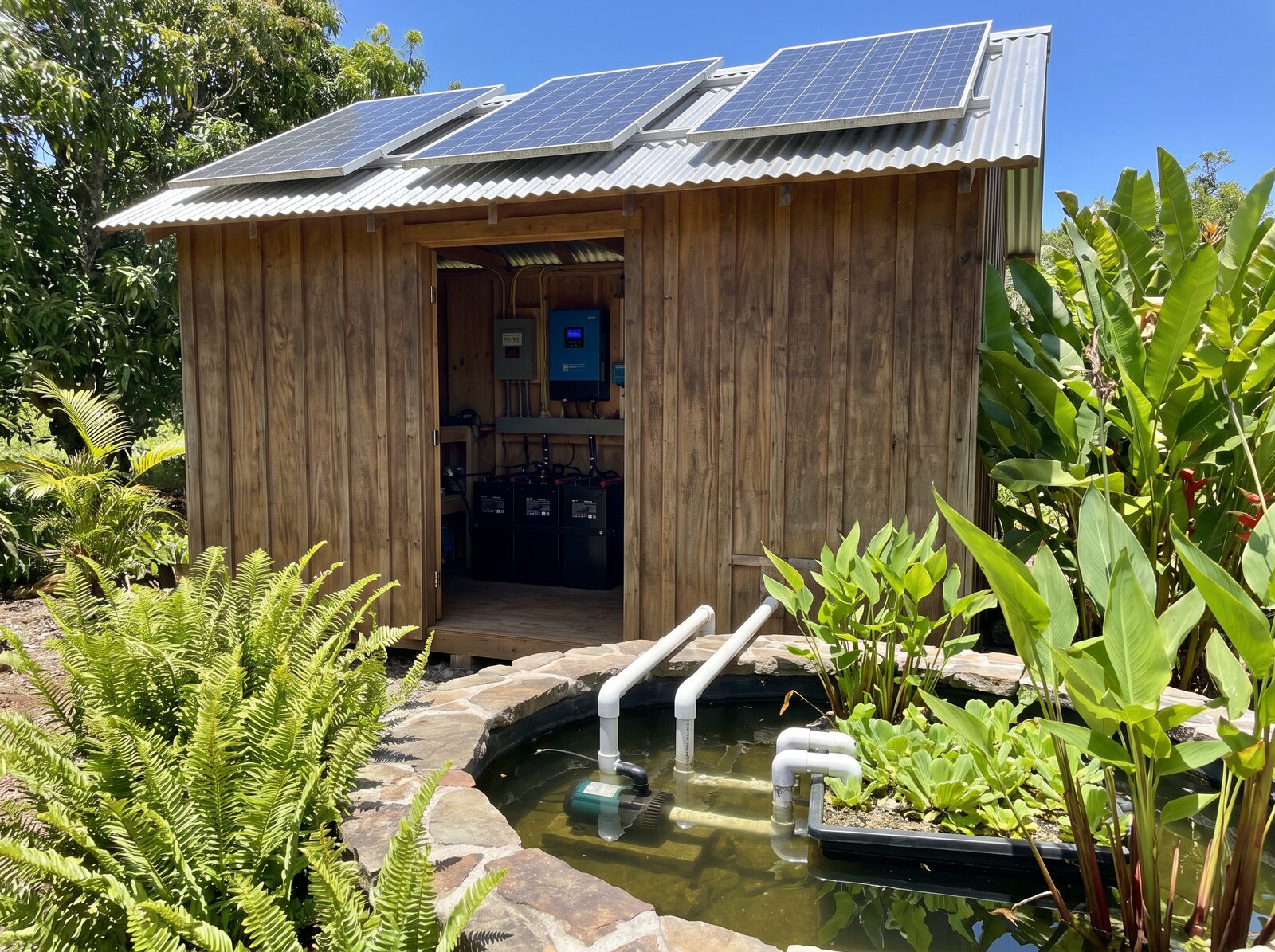
Solar House & Pump Stations
A 6×10-foot solar house holds the inverters, batteries, and controls that run the entire property, feeding 2–3 correctly sized pumps that keep water moving efficiently through the aquaponic loop.
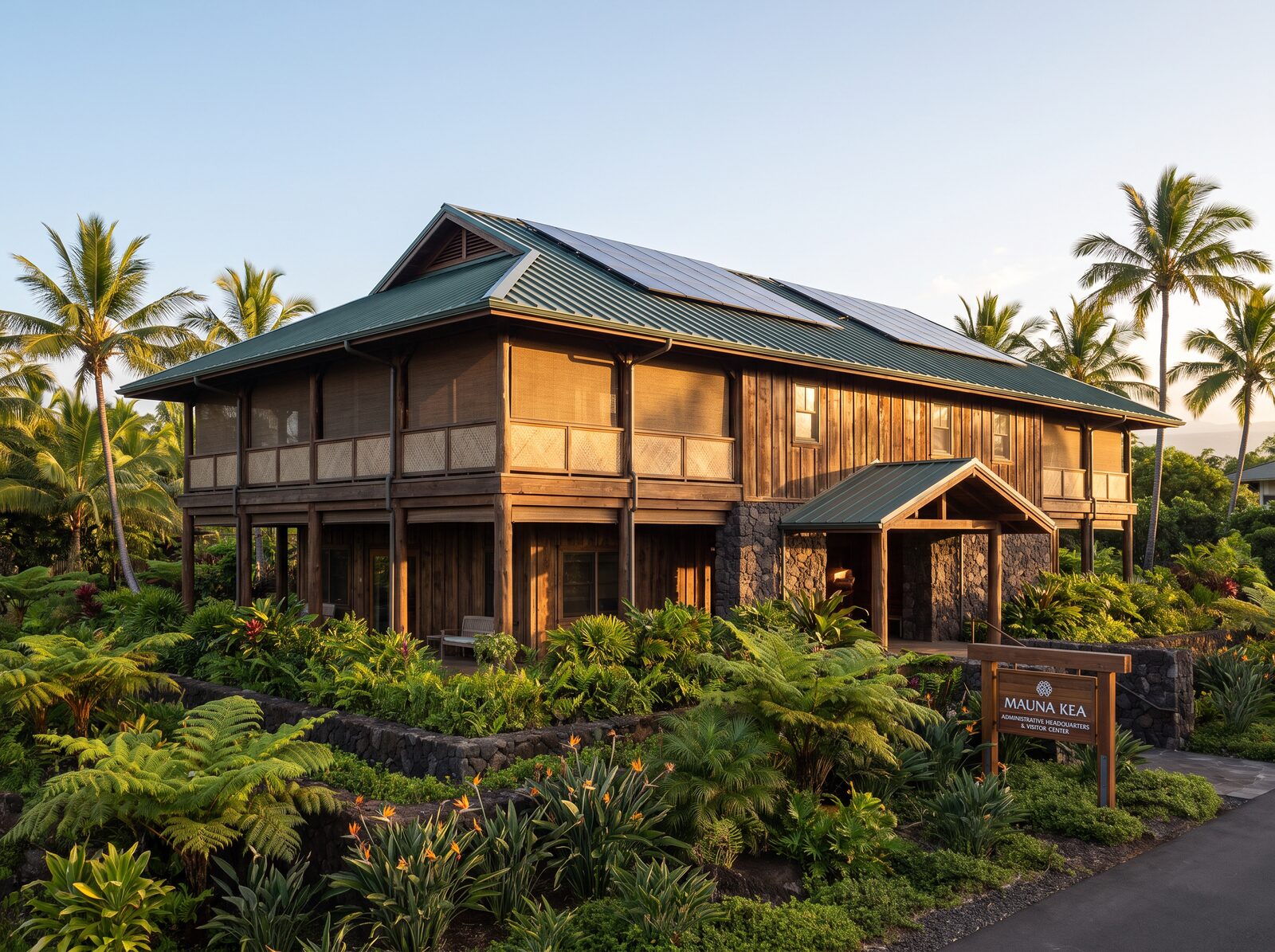
Two-Story Hawaiian Base Office
The administrative hub, visitor center, and cultural showcase for WWS's environmental and humanitarian mission — plus sleeping quarters for maintenance staff and conference guests.
What Grows Here
A living index of Hawaiian conue plants and food forest crops
Every plant on the property has a purpose — food, medicine, culture, or all three. Here's what's rooted in the ground right now.
Help Us Finish the Sanctuary
Every station on this walkthrough still needs your help to reach completion
The Agro Culture Sanctuary is being built in phases, by hand, on donated time and donated materials. Your gift goes directly toward pond liner, greenhouse film, biochar drums, timber for the walkway roof, solar equipment, and the pumps that keep clean water moving through the whole system.
Every contribution — large or small — moves us closer to a fully operational, fully solar, fully open sanctuary that anyone can walk through and learn from.
Prefer to give monthly, quarterly, or yearly? Recurring options — from $10/mo to $1,000/yr — are available once you click through to the secure donation form.
Donate Now
World Water Solutions is a nonprofit building this sanctuary as a free, open blueprint for regenerative agriculture, clean water access, and Native Hawaiian ecological practice. Your donation is tax-deductible and goes straight to construction and materials.
Donate to the SanctuarySecure giving powered by Zeffy — 100% of your donation goes to World Water Solutions, with zero platform fees.